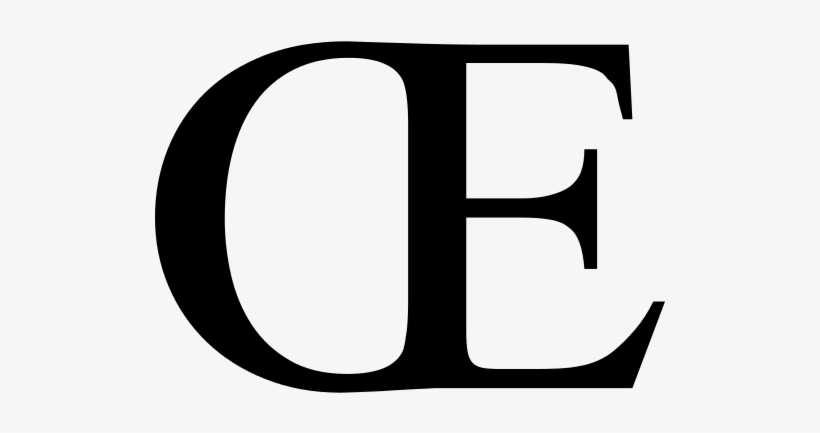
The mid front rounded vowel is a type of vowel sound, used in some spoken languages.
Although there is no dedicated symbol in the International Phonetic Alphabet that represents the "exact" mid front rounded vowel between close-mid [ø] and open-mid [œ], ⟨ø⟩ is generally used. If precision is desired, diacritics can be used, such as ⟨ø̞⟩ or ⟨œ̝⟩.
Mid front compressed vowel
The mid front compressed vowel is typically transcribed in IPA simply as ⟨ø̞⟩ or ⟨œ̝⟩. This article uses the first symbol for simplicity. There is no dedicated diacritic for compression in the IPA. However, the compression of the lips can be shown with the letter ⟨β̞⟩ as ⟨e̞͡β̞⟩ / ⟨ɛ̝͡β̞⟩ (simultaneous [e̞] / [ɛ̝] and labial compression) or ⟨e̞ᵝ⟩ / ⟨ɛ̝ᵝ⟩ ([e̞] / [ɛ̝] modified with labial compression). The spread-lip diacritic ⟨ ͍⟩ may also be used with a rounded vowel letters ⟨ø͍˕⟩ / ⟨œ͍˔⟩ as an ad hoc symbol, though technically 'spread' means unrounded.
Features
- Its vowel height is mid, which means the tongue is positioned halfway between a close vowel and an open vowel.
- Its vowel backness is front, which means the tongue is positioned forward in the mouth without creating a constriction that would be classified as a consonant. Rounded front vowels are often centralized, which means that often they are in fact near-front.
- Its roundedness is compressed, which means that the margins of the lips are tense and drawn together in such a way that the inner surfaces are not exposed.
Occurrence
Because front rounded vowels are assumed to have compression, and few descriptions cover the distinction, some of the following may actually have protrusion.
Mid front protruded vowel
Catford notes that most languages with rounded front and back vowels use distinct types of labialization, protruded back vowels and compressed front vowels. However, a few languages, such as Scandinavian ones, have protruded front vowels. One of these, Swedish, even contrasts the two types of rounding in front vowels (see near-close near-front rounded vowel, with Swedish examples of both types of rounding).
As there are no diacritics in the IPA to distinguish protruded and compressed rounding, ⟨ø̞ʷ⟩ (a mid front rounded vowel modified by endolabialization) will be used here as an ad hoc symbol for protruded mid front vowels.
Acoustically, this sound is "between" the more typical compressed mid front vowel [ø̞] and the unrounded mid front vowel [e̞].
Features
- Its vowel height is mid, which means the tongue is positioned halfway between a close vowel and an open vowel.
- Its vowel backness is front, which means the tongue is positioned forward in the mouth without creating a constriction that would be classified as a consonant. Rounded front vowels are often centralized, which means that often they are in fact near-front.
- Its roundedness is protruded, which means that the corners of the lips are drawn together, and the inner surfaces exposed.
Occurrence
Notes
References
External links
- List of languages with [ø̞] on PHOIBLE